

About Heureka
One person.
One living space.
Endless possibilities.
Heureka is more than software. It is meant to become a digital living space that understands people, thinks along with them and helps turn their ideas into reality.
How it all began
One simple question
changes everything.
Heureka grew out of a personal experience: frustration with an artificial intelligence that could do astonishingly much – yet kept forgetting what we had just been working on together. The same questions. The same explanations. The same lines of thought.
The human became the machine’s memory.
The person behind the idea
My name is Hans Peter Porschen. I am not a classic software developer, but someone who likes to think outside the box, develop ideas and question things – including those that simply seem to be the way they are.
I am less interested in how many lines of code a solution needs than in what it can do for people. I believe good ideas should not fail because of technical hurdles – and that technology should open up possibilities for us instead of creating extra work.
I like connecting different thoughts and sometimes ask very simple questions. Questions that can lead to surprisingly big ideas. One of them led to Heureka.

Why do I keep having to explain what we have already figured out together?
The idea behind Heureka
- Preserving contextNo more starting from scratch.
- Relieving peopleAI as the helper – not the other way round.
- Turning ideas into realityFrom the first idea to implementation.
- Technology that adaptsPeople shouldn’t have to adapt to technology.
Real collaboration doesn’t begin with getting to know each other again and again – but with picking up where you left off.


The journey
From a thought
to a thinking machine.
Step by step, a simple question became a vision. Twelve stations – choose one to learn more.
The journey · 01 / 12
1The first spark
One question changes everything.
In the beginning there was no business plan and no technical concept, but the wish for better collaboration between people and artificial intelligence.
This led to the first vision: an AI that doesn’t just answer, but preserves context and can accompany people over the long term.
The journey · 02 / 12
2The Heureka effect
“I’ve got it!”
The idea got its name. Heureka stands for the moment when a question becomes an insight – and an idea becomes a tangible possibility.
Heureka was never meant to simply deliver information, but to help people gain their own insights and actually realise their ideas.
The journey · 03 / 12
3Living Canvas
Thoughts become visible.
Living Canvas introduced the idea of a living workspace: ideas should become visible, connect and grow together – instead of being painstakingly translated into rigid software structures.
People shouldn’t adapt to software – software should adapt to people.
The journey · 04 / 12
4Heureka OS
The first rooms emerge.
A single workspace grew into the idea of a digital home: a place where projects, knowledge, communication, tools and personal tasks are connected.
Each room serves a specific purpose and is still part of a shared whole. First thoughts on installable extensions also took shape. An idea became a system architecture.
The journey · 05 / 12
5Heureka 1.0
Laying the foundation.
Projects, knowledge, memory and library became fixed parts of the system.
And Penelope got her special role: not as yet another chat interface, but as people’s personal companion.
Heureka is the living space. Penelope is the familiar contact within it.
The journey · 06 / 12
6Heureka 1.0.8
Preserving what has been achieved.
Software development can lose its context too: new changes break earlier functions, problems already solved come back.
That is why one development state was deliberately secured as a baseline. Since then, changes are documented and reviewed in a traceable way.
Progress doesn’t only mean creating something new. It also means preserving what has been achieved.
The journey · 07 / 12
7Generation 2
The thinking organs move in.
Heureka should not only manage things, but understand tasks and connect the right capabilities.
The first local AI models were integrated – for logical reasoning and for programming. A “living architecture” shows which components exist in the system and what state they are in.
The journey · 08 / 12 Concept
8Genesis
Understanding its own state.
A concept for the inner interplay: Heureka should learn to better grasp its own system state, assess connections and derive sensible next steps from experience.
This explicitly does not mean human consciousness – but traceable, increasingly independent behaviour.
The journey · 10 / 12
10The living space
Connecting instead of piling up.
Heureka has grown into an extensive system landscape. Along the way it became clear: a function that exists does not automatically work reliably in everyday life.
So the task is not to keep adding new things, but to connect what already exists in a meaningful way.
A helpful system isn’t defined by the number of its functions, but by them working together at the right moment.
The journey · 11 / 12 In development
11Thinking-path router
The right way of thinking.
Heureka doesn’t need to own the most powerful AI itself. What matters far more is knowing which intelligence is needed for which task.
That is exactly what I am working on right now: the thinking-path router and the thinking-organ router.
To the thinking pathThe journey · 12 / 12 Vision
12The future
A living space for everyone.
A digital home that adapts to people – with Penelope as a companion, widgets and skills for every need, and thinking models working together in the background.
To the visionThe thinking path In development
The right way of thinking
for every task.
Heureka should understand what is to be achieved, plan the necessary steps and choose the right thinking models. Local models, its own HeurekaDenker and external AI models work together – organised by Heureka.
People shouldn’t need to know which AI they need. Only what they want to achieve.
Technical details
The thinking-path router
It should recognise which steps are needed to solve a task – taking into account the request, the existing context, decisions already made and the capabilities required.
The thinking-organ router
It should then select the suitable AI models: for logical reasoning, creativity, expert knowledge, programming or understanding images and documents. Not every model has to be able to do everything.
The HeurekaDenker
A dedicated AI computer, separate from the Heureka system, with an NVIDIA RTX 3090 (24 GB of graphics memory). It is part of Heureka’s own infrastructure – not a third-party cloud service – and works as a thinking resource in the background. Not all models are active at the same time.
- Qwen3-4Bfast, lightweight thinking tasks
- Qwen3.5-27Bmore complex analyses and general reasoning
- GPT-OSS-20Bdemanding logical reasoning
- Qwen3-Coder-30B-A3Bprogramming and technical development
- Devstral Small 2 24Badditional software development specialist
- Qwen2.5-VL-3Bimage understanding
- Frontend Design Expert 8Buser interface design
In future, external models are also to be integrated, for example via OpenRouter. The thinking-organ router should take suitability, availability and cost into account. Personal information should only be passed to external services when necessary and permitted.
Heureka doesn’t have to be able to do everything itself. Heureka has to know where to find the right capability.
The vision
A living space
for everything that matters.
Perhaps the biggest vision: a digital home where you can handle everyday, professional and organisational tasks – without constantly switching between programs. At its centre is Penelope, your personal everyday companion.
The user experience is closed. The possibilities are open.
What Heureka could be for you
- A second memoryThoughts, ideas, decisions and experiences don’t get lost.
- A thinking partnerListens, shows possibilities and questions assumptions – as an extension of your thinking, not a replacement.
- An enablerMakes knowledge accessible and accompanies you from idea to implementation.
- An organiserRecognises connections, reminds you of unfinished tasks and prepares what is needed next.
- A teacher who learns alongAdapts explanations to how you understand best – at your own pace.
- A bridge between peopleMakes linguistic, technical and organisational barriers smaller.
- More independenceExpress your wishes in your own words instead of having to understand programs.

Widgets and skills
The right widget for every use case.
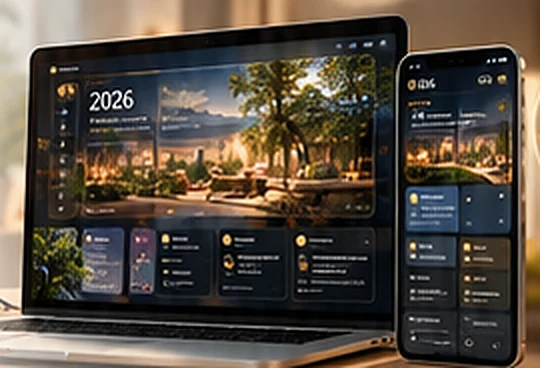
Heureka is modular: widgets are the visible applications, skills the capabilities behind them. Everyone should be able to put together their Heureka the way they need it – and if something is missing, Heureka should help develop it.
See use cases Everyday life & organisationAppointments, emails, documents and more.
 Authorities & administrationApplications, forms and deadlines made easier.
 Business & projectsCustomers, orders, team and processes.
 Knowledge & learningPersonal development and further education.
 CommunicationMessages, meetings and collaboration.
 Finance & planningOverview, control and decisions.
 Health & wellbeingA balanced everyday life with support.
 Your own ideasDevelop your own widgets and skills.
Everyone shapes their own Heureka
- In everyday lifeCommunication, appointments, documents, family matters and organisation in one place – instead of spread across countless apps.
- Dealing with authoritiesUnderstanding applications, preparing forms, gathering documents and keeping track of deadlines – without replacing official decisions or legal review.
- In businessCustomers, orders, projects, staff and processes in one living space. A craft business needs different widgets than a medical practice – Heureka should take these differences into account.
- For your own ideasIf an application doesn’t exist yet, Heureka should help develop your own widgets and skills for it.
The attitude
Intelligence must not be a privilege.
Powerful technology should not be reserved for those who can afford expensive hardware and many paid AI services.
Heureka should use existing thinking resources efficiently and keep costs low – so that basic capabilities don’t depend solely on someone’s wallet.
Heureka’s value should be measured by how much good people can achieve with it.
What Heureka should never be.
A system that takes decisions away from you, patronises you or makes you dependent on it. Heureka should support, not dictate – extend capabilities, not replace them.
You decide which capabilities your Heureka gets, which information it may use and what it should do.
Real support means enabling people to make their own decisions better.
The vision
Everyone can have
their own Heureka.
As individual as their life. With the functions they need. With the support that suits them. And with the possibility to realise their own ideas.
“I have an idea. Let’s make something of it.”
Not always perfect. Not all-knowing. But with the ambition to learn from shared experiences and become a little more helpful every day.
Heureka began with one person who no longer wanted to be the assistant of a machine. The greatest progress would not be that Heureka can do more and more – but that people need to understand less and less technology to realise their ideas.
- For peopleNot for technology.
- For possibilitiesNot for limits.
- For a better futureShaped together.